Stitch braids, feed-in braids and straight-backs
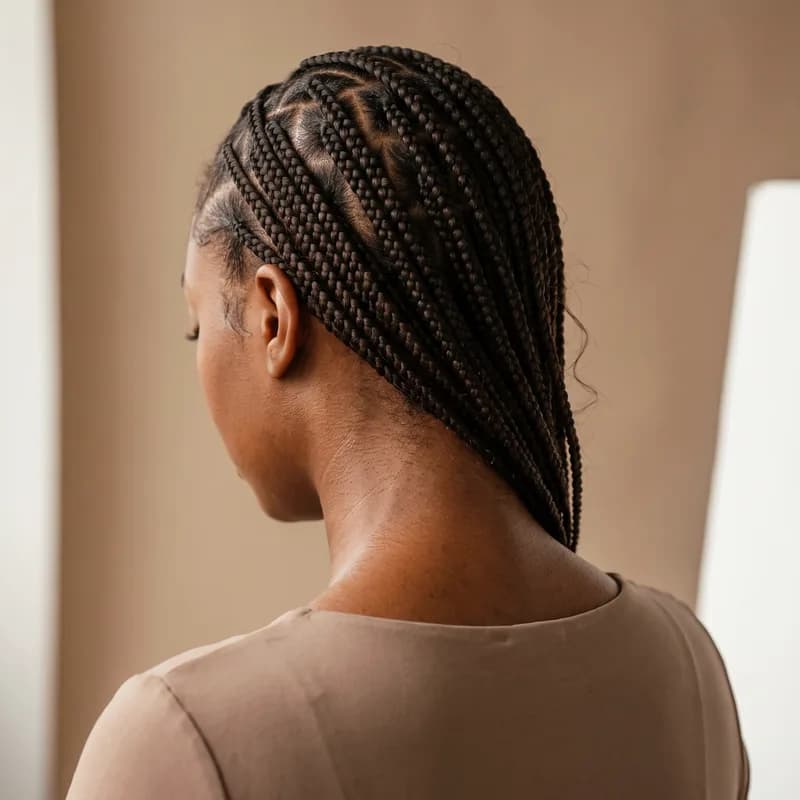
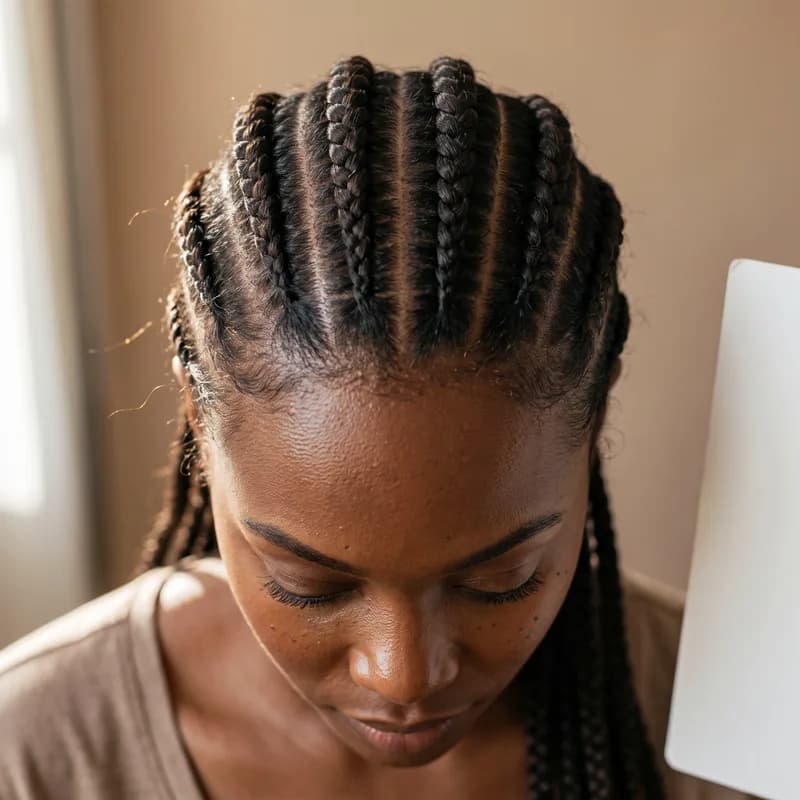
Feed-in braids add extension hair gradually as the row travels back, so the braid starts flat at the hairline and thickens along its length. That is what gives the seamless, no-bulk look at the front.
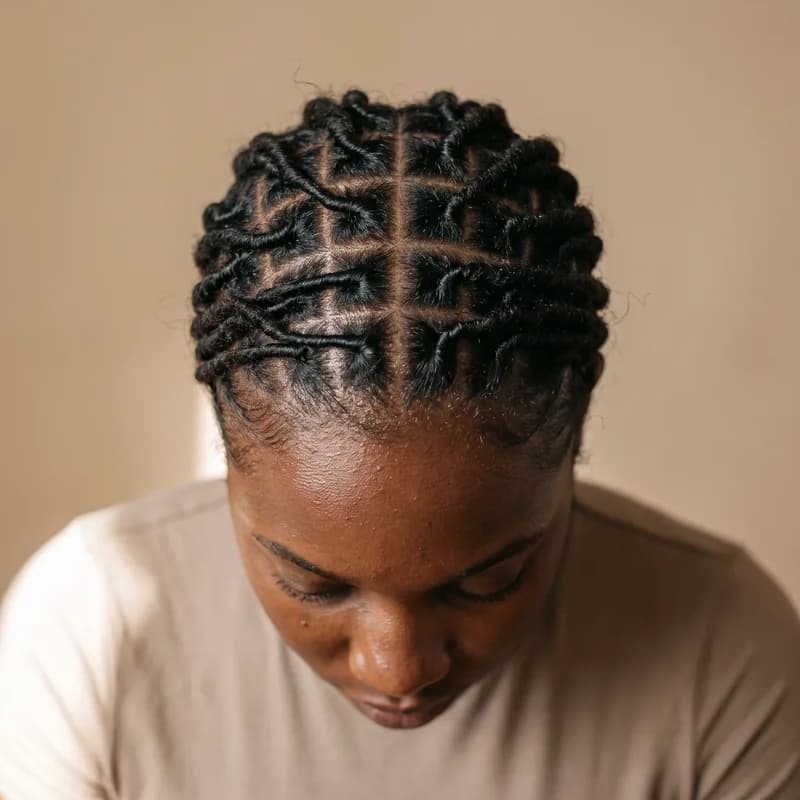
Stitch braids take the same idea further, with tight horizontal divisions worked into each row so the braid reads as a series of clean segments. They take longer and hold their definition noticeably better through week three.
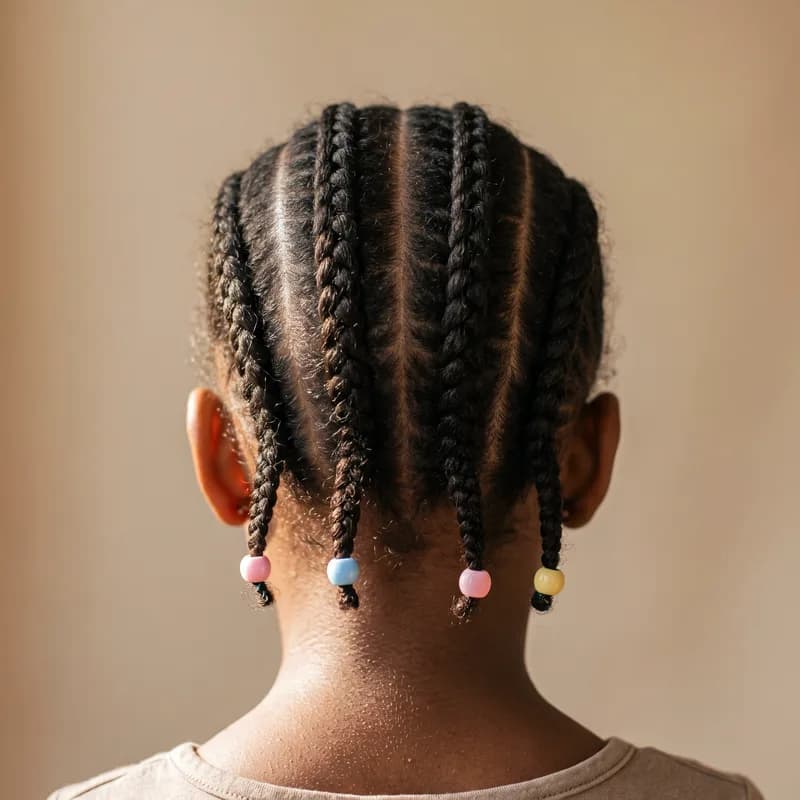
Straight-backs are the classic: parallel rows from hairline to nape, no pattern. Fastest to install, easiest to maintain, and the most common base for a wig or a sew-in.
Patterns, kids and men's styles
Freestyle patterns — curves, zigzags, hearts, geometric parts — are quoted on complexity. Bring a reference photo; we will tell you before you book whether it works with your density and length.
We braid children's hair and men's styles at the same standard and with the same tension rules. Children's scalps are more sensitive, not less, so anything that pulls comes out and goes back in.
A cornrow base under a wig or sew-in is a service in its own right. It needs to lie flat, sit evenly, and not create a ridge under the unit — book it as a base install and say what is going over it.
Why cornrows are the best-value protective style
Two to three hours, $70 to $130, and four to six weeks of wear. No other protective style gives that ratio.
They are also the gentlest reset. If you have just taken down a long braid set and your scalp needs a break before the next one, a clean set of straight-backs protects your hair without the weight of a full-length install.
Clients book these from Gaithersburg, Rockville and Montgomery Village on the way into a holiday, a competition season, or a stretch of gym weeks — anywhere hair needs to be out of the way and stay that way.
Maintenance
Cornrows show frizz sooner than an individual braid because the row is exposed along its whole length. A satin scarf at night is not optional if you want them to look sharp past week two.
Light scalp oil twice a week along the parts. A little mousse or setting foam smoothed along the rows revives them when they start to fuzz.
Four to six weeks is the honest limit. Rows sit close to the scalp, so new growth lifts them faster than it lifts an individual braid.